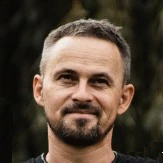

Actor Val Kilmer, who died in April 2025, is set to appear on screen once again—this time in the independent film As Deep as the Grave. His presence will be created through advanced generative artificial intelligence, reconstructing both his likeness and his voice. Although Kilmer never filmed his scenes in person, the filmmakers chose to complete his role through technology they say aligns with the circumstances—and with what the actor wanted.
The Role Was Written Specifically for Him
Writer-director Coerte Voorhees has said that Kilmer was the first—and only—choice for the part of Father Fintan, a Catholic priest who also serves as a spiritual guide connected to Indigenous American traditions. According to Voorhees, the character was built with Kilmer in mind from the start, shaped around his personality, his roots, and his long-standing connection to the American Southwest.
Voorhees added that Kilmer was genuinely interested in the project and intended to be involved. However, severe health complications ultimately made it impossible for him to travel to set. Kilmer had been battling throat cancer since 2015, and his condition had increasingly limited his ability to work.
His Health Made Filming Impossible
Voorhees explained that Kilmer had been officially cast and was included in the production schedule. But at the critical moment, he was going through an exceptionally difficult period and could not physically perform in front of the camera. For the crew, it created a major challenge—because the role was central to the story.
Instead of recasting, the team pursued another route. The decision wasn’t framed as a purely artistic experiment, but also a practical one. With a limited budget, restarting production at full scale wasn’t feasible, and the filmmakers turned to technology that, in the director’s view, offered a way to preserve the original vision.
How a Digital Val Kilmer Was Created
To build Kilmer’s on-screen presence, the filmmakers relied on archival material from different periods of his life. Some of the reference images and source materials were provided by Kilmer’s family. This allowed the production to depict the character across multiple life stages reflected in the film’s narrative—drawing not only from younger photos, but also from footage and images from Kilmer’s later years.
The same level of attention was given to the voice. Kilmer’s speech had been significantly affected by a tracheostomy following his cancer diagnosis. As a result, the filmmakers used technology capable of restoring or recreating the sound of his earlier voice. Voorhees noted that this also produced an unexpected thematic link, since the character himself faces similar health struggles within the story.
Approval From the Family and the Estate
The production says the entire process was carried out with the consent of Kilmer’s estate. The filmmakers obtained permission to use his likeness and voice, and they state that the work was handled in line with professional standards and acting-industry rules. Voorhees also said the estate was compensated for Kilmer’s participation in accordance with union guidelines.
Kilmer’s family played a key role in the decision as well. According to Voorhees, they repeatedly emphasized that the film mattered to Val and that his interest in participating was real. That support, he suggested, helped address concerns about the potential controversy of using AI to portray a deceased performer.
Voorhees insists the goal wasn’t a flashy tech demonstration, but a way to complete a film Kilmer cared about—one he wanted his name attached to.
His Daughter Mercedes Supported the Choice
Mercedes Kilmer has publicly made it clear she supports the use of her father’s likeness in the film. She described him as deeply spiritual and drawn to stories of searching, transformation, and inner discovery—motifs that As Deep as the Grave places within the landscapes and atmosphere of the American Southwest, a region close to him.
Mercedes also said her father viewed emerging technology with optimism, seeing it as a tool that could expand storytelling possibilities. In her view, that attitude is being honored here. She emphasized that Val’s involvement wasn’t symbolic or retroactive—he had been an essential part of the project from the beginning.
AI Wasn’t New Territory for Kilmer
The use of AI in this context isn’t entirely new in Kilmer’s story. He previously worked with the tech company Sonantic, known for synthetic voice modeling, to develop a way for him to communicate again through a digitally restored version of his voice.
The technology gained broader attention through Top Gun: Maverick (2022), where it helped support his scene in the film. At the time, Kilmer provided archival recordings and took an active role in shaping a solution that preserved his vocal identity despite the effects of treatment.
The Film Fuels a Larger Debate About Acting’s Future
As Deep as the Grave is drawing attention not only because of its cast, but because it raises larger questions about what AI should—and shouldn’t—do in filmmaking. In this case, the filmmakers stress that the intent was not to replace an actor without consent, but to complete a planned collaboration with the support of Kilmer’s family and estate. They argue that context is the defining factor.
Alongside the digitally created appearance of Val Kilmer, the film also features Abigail Lawrie, Tom Felton, Wes Studi, and Abigail Breslin. The project blends traditional performances with modern technology—and underscores how one actor’s presence can shape a film, even after they’re gone.
Sources: Variety, People



Comments 0
No comments yet. Be the first to share your thoughts!
Leave a Comment