
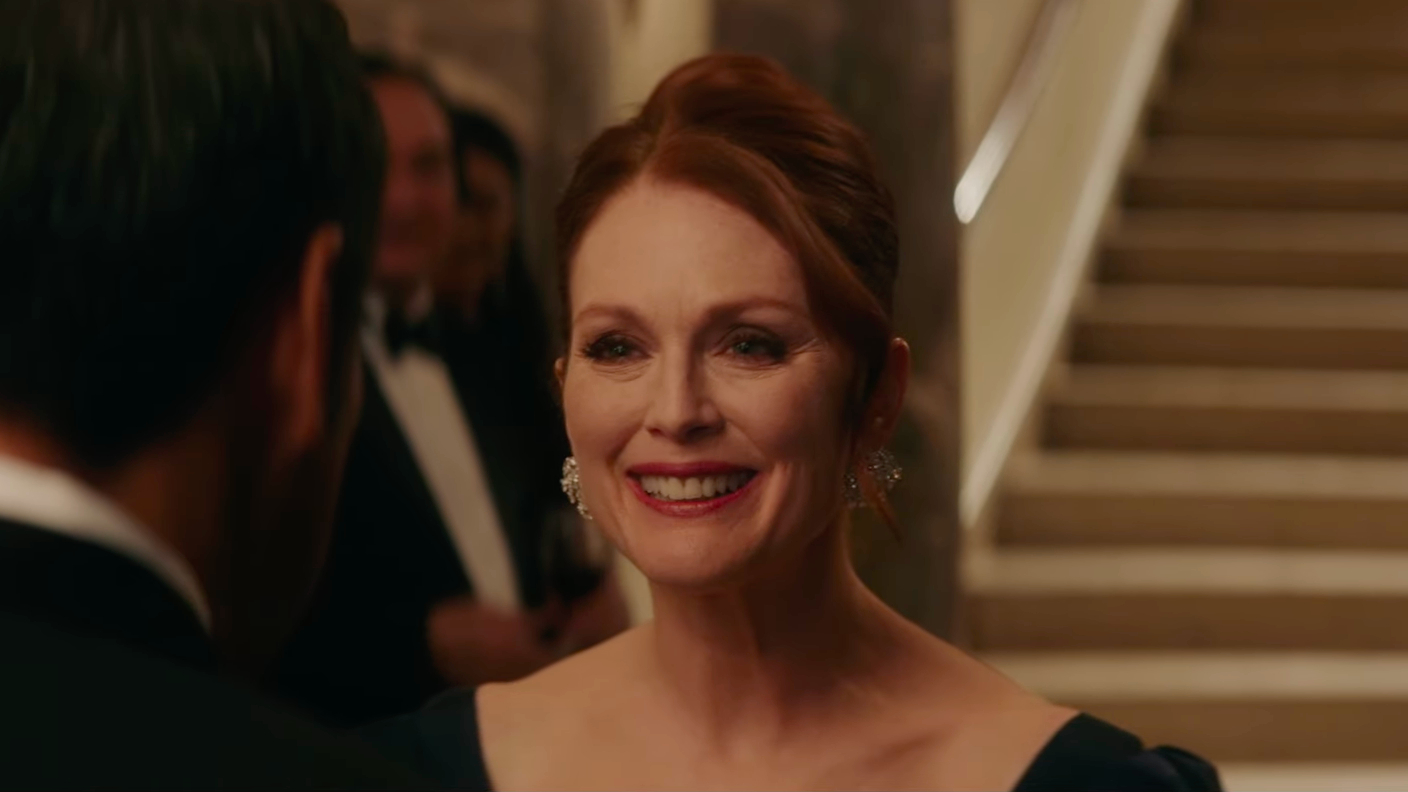
Bel Canto blends romance, political tension, and art into a story about a hostage situation that slowly transforms into something unexpectedly intimate. At the center is Roxanne Coss, a world-famous opera singer portrayed by Julianne Moore, whose presence elevates the film with emotional depth and quiet intensity.
The narrative begins with a high-profile gathering in a Latin American country, where wealthy guests are taken hostage by armed rebels. What follows is not just a tale of survival, but a study of human connection formed under extreme circumstances.
Julianne Moore carries the emotional weight
Julianne Moore delivers a restrained yet powerful performance, expressing complex emotions through subtle gestures and expressions. Her character is both distant and vulnerable, gradually opening up as the situation unfolds.
Although her singing voice is dubbed, her physical performance aligns seamlessly with the music, creating a convincing illusion. The emotional resonance of her scenes often comes not from dialogue, but from the quiet intensity she brings to each moment.
Music becomes a bridge between strangers who would otherwise remain divided by language and circumstance
A romance born in confinement
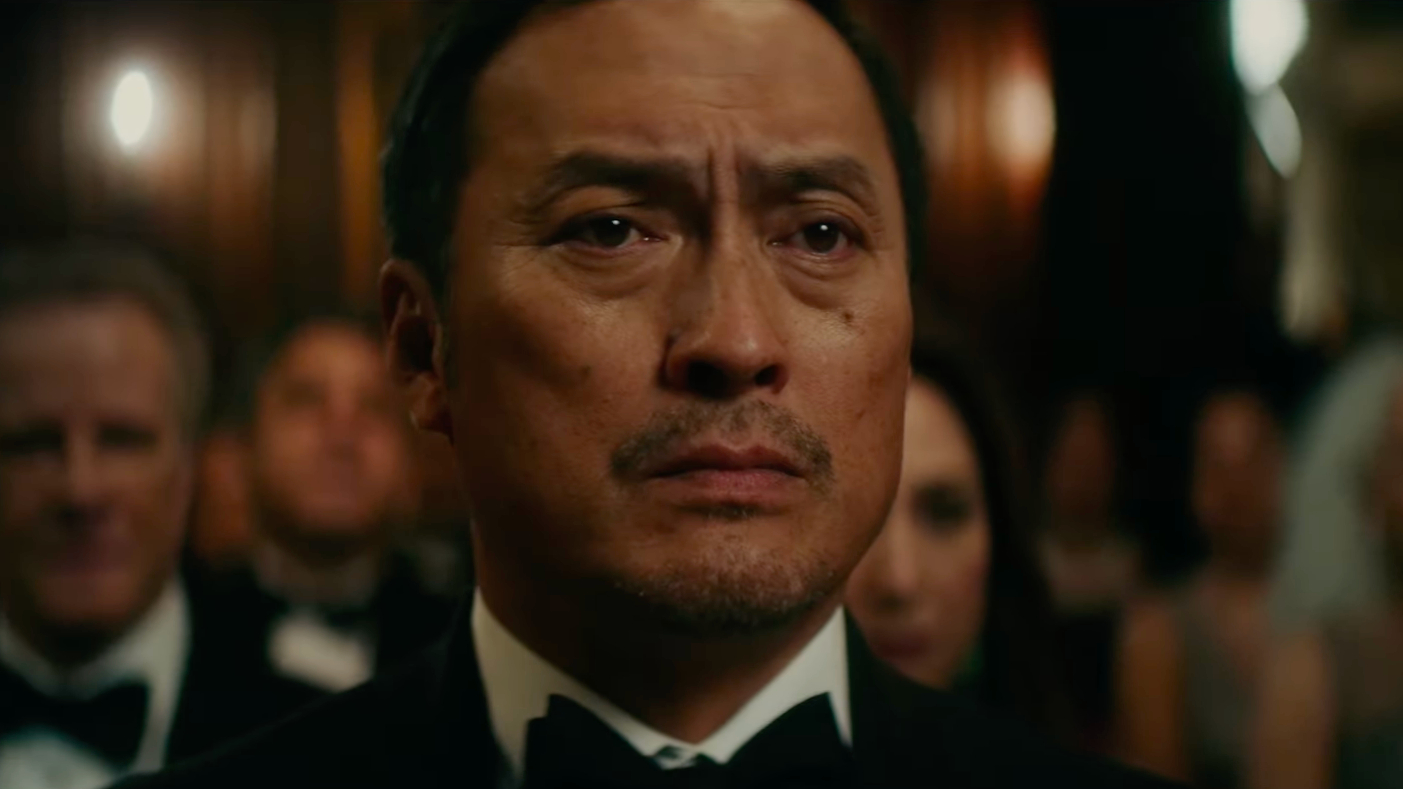
Among the hostages is a Japanese businessman, Hosokawa, played by Ken Watanabe, who develops a deep connection with Roxanne. Their relationship unfolds gently, built on shared silence, glances, and mutual understanding rather than words.
Despite the language barrier, their bond becomes one of the film’s emotional anchors, showing how connection can form even in the most unlikely conditions.
An ensemble story shaped by tension and empathy
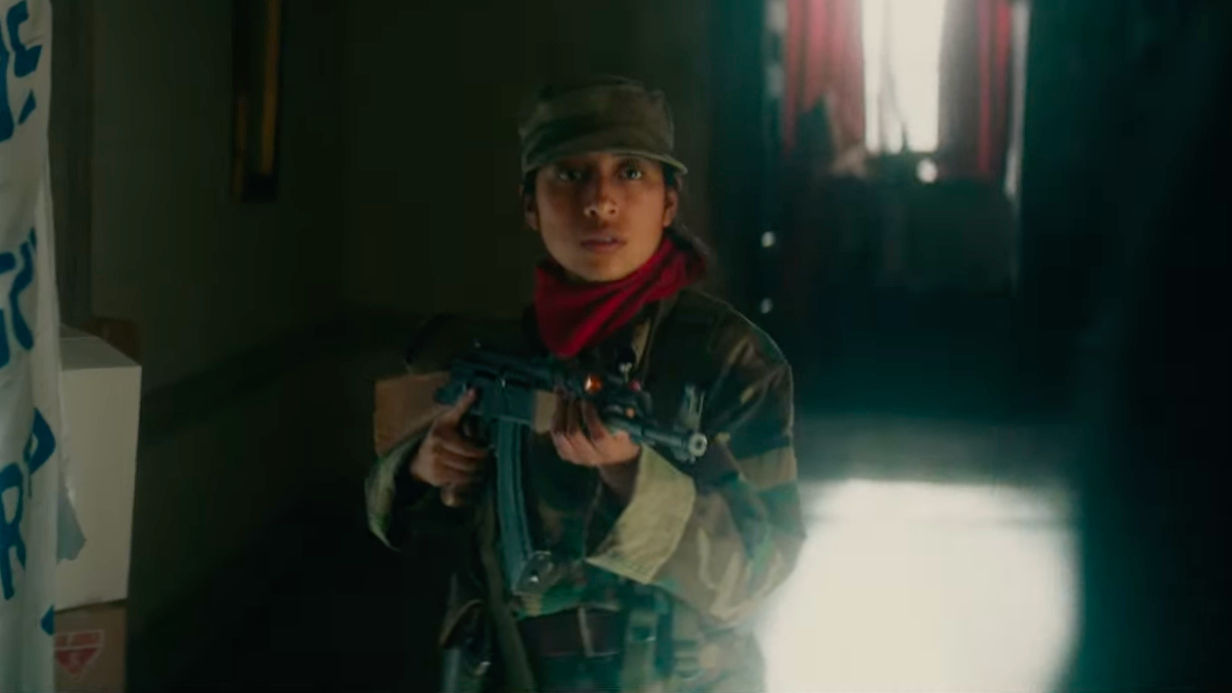
While Moore and Watanabe lead the cast, the story functions as an ensemble piece. Hostages and captors alike begin to reveal their humanity, blurring the lines between victim and aggressor.
The rebel leader, driven by desperation and political frustration, emerges as a layered character rather than a simple antagonist. His motivations reflect broader social struggles, adding weight to the situation.
Atmosphere shifting between fear and unexpected calm
The film moves between moments of tension and surprising calm. As negotiations stall, fear gives way to routine, and relationships begin to form. Scenes of music, conversation, and even moments of play create an almost surreal contrast to the underlying danger.
This gradual transformation gives the film a unique tone, where beauty and violence exist side by side.
Visual storytelling and emotional nuance
The cinematography subtly reflects the emotional shifts of the story. Early scenes feel vibrant and full of life, while later moments carry a more muted and introspective tone.
The use of close-ups allows the audience to connect deeply with the characters, emphasizing silent communication and emotional tension.
Imperfect structure but lasting impact
The relatively short runtime limits the film’s ability to fully explore all character arcs, and some relationships feel underdeveloped. At times, the pacing leans toward melodrama, with moments that feel overly sentimental or improbable.
Despite these flaws, the emotional core remains effective, drawing viewers into the evolving relationships and the fragile sense of unity that develops among the characters.
Music as the soul of the film
Music plays a central role, not only as performance but as a form of communication that transcends language and conflict. Roxanne’s voice becomes a unifying force, calming tensions and connecting individuals from vastly different backgrounds.
The score enhances this atmosphere, reinforcing the idea that art can offer meaning and connection even in the darkest situations.
A reflective and emotional conclusion
As the story reaches its tragic conclusion, the film leaves a lasting impression of shared humanity and lost possibilities. The final moments emphasize how fleeting connection can be, and how deeply it can affect those who experience it.
Bel Canto may not fully capture the scope of its source material, but it succeeds as an emotional and thought-provoking film that explores love, art, and human connection under extraordinary circumstances.
Sources: Bel Canto review on The Guardian, Bel Canto review, IMDb – Bel Canto, Bel Canto novel by Ann Patchett




Comments 0
No comments yet. Be the first to share your thoughts!
Leave a Comment