
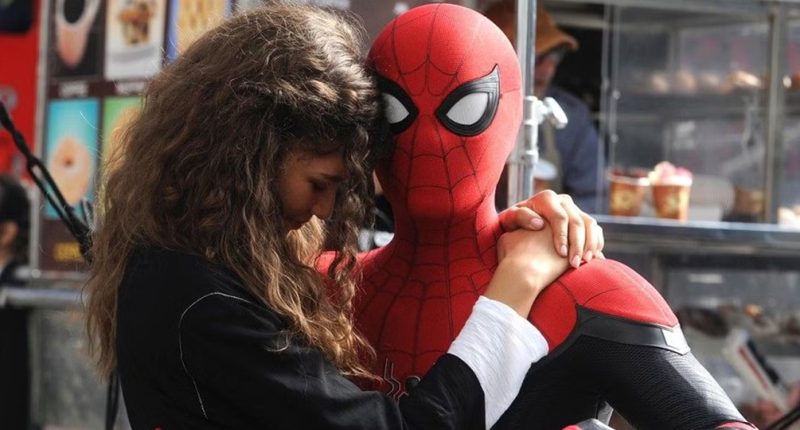
When people talk about Spider-Man, most fans immediately picture high-flying action, skyscrapers, the iconic red-and-blue suit, and Peter Parker’s constant tug-of-war between an ordinary life and heroic duty. But without a strong female presence, the story would feel far colder. That’s where M.J.—Mary Jane Watson or her modern variations—becomes essential. She gives Spider-Man humanity, emotion, and real stakes. She isn’t merely “the girl the hero loves.” She’s a character who reflects Peter’s weaknesses, hopes, and his fear of loss.
Every actress who has played M.J. has brought a different kind of energy to the role. One was tender and romantic, another more modern and grounded, another sharper and more self-possessed. And as M.J. changed, so did the chemistry with Peter—and with it, the tone of each Spider-Man era. M.J. isn’t an accessory. She’s an emotional anchor, the person who keeps Peter from becoming just another lonely superhero trapped in an endless loop of battles.
Kirsten Dunst as the face of the classic movie Mary Jane
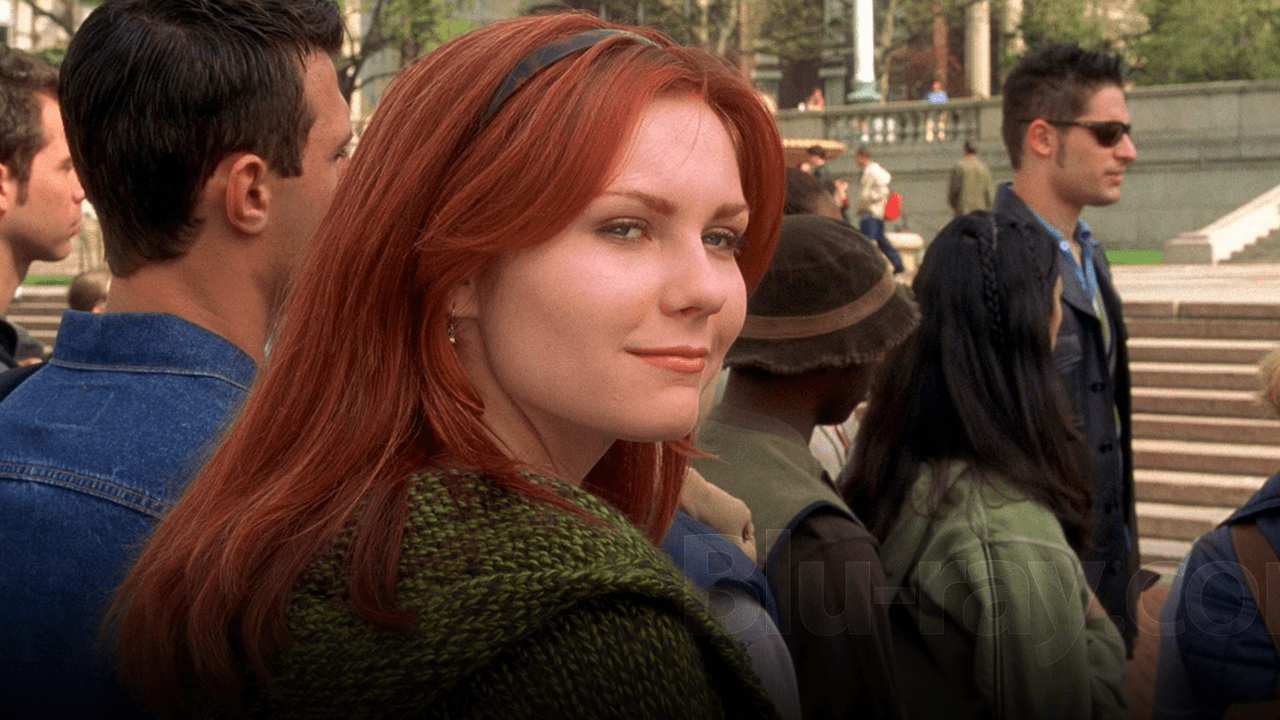
For an entire generation, the most recognizable on-screen M.J. remains Kirsten Dunst. In Sam Raimi’s trilogy, she created a Mary Jane who was romantic and vulnerable, yet still driven by her own dreams and frustrations. She wasn’t simply a poster-perfect ideal—she was a young woman trying to make it, searching for her place in the world, and struggling with the feeling that people didn’t truly see her for who she was.
Dunst brought softness and natural charisma. Her relationship with Peter Parker, played by Tobey Maguire, was built more on emotion than on rapid-fire banter. As a result, their love felt sincere—sometimes painful, sometimes almost storybook. The famous upside-down rain kiss became iconic not only because of the direction, but because both actors sold the attraction so convincingly.
This version of M.J. proved that Spider-Man works best when he has someone beside him who represents everything he longs for—yet, because of his double life, can’t simply keep. Kirsten Dunst became a symbol of an era when comic-book movies weren’t driven primarily by winks and exaggeration, but by heartfelt emotion.
A romance that helped define superhero cinema
In early-2000s blockbusters, it wasn’t a given that a superhero film would lean so heavily on romance. Yet M.J., as played by Kirsten Dunst, helped create a balance between spectacle and drama. Viewers didn’t just wait for the next villain fight—they wanted to know whether Peter would finally tell the truth, and whether their relationship could survive the weight of secrets.
Without a strong M.J., Spider-Man wouldn’t be a story about growing up, love, and sacrifice—only a flashy adventure in masks.
Zendaya and a new M.J. for a modern audience
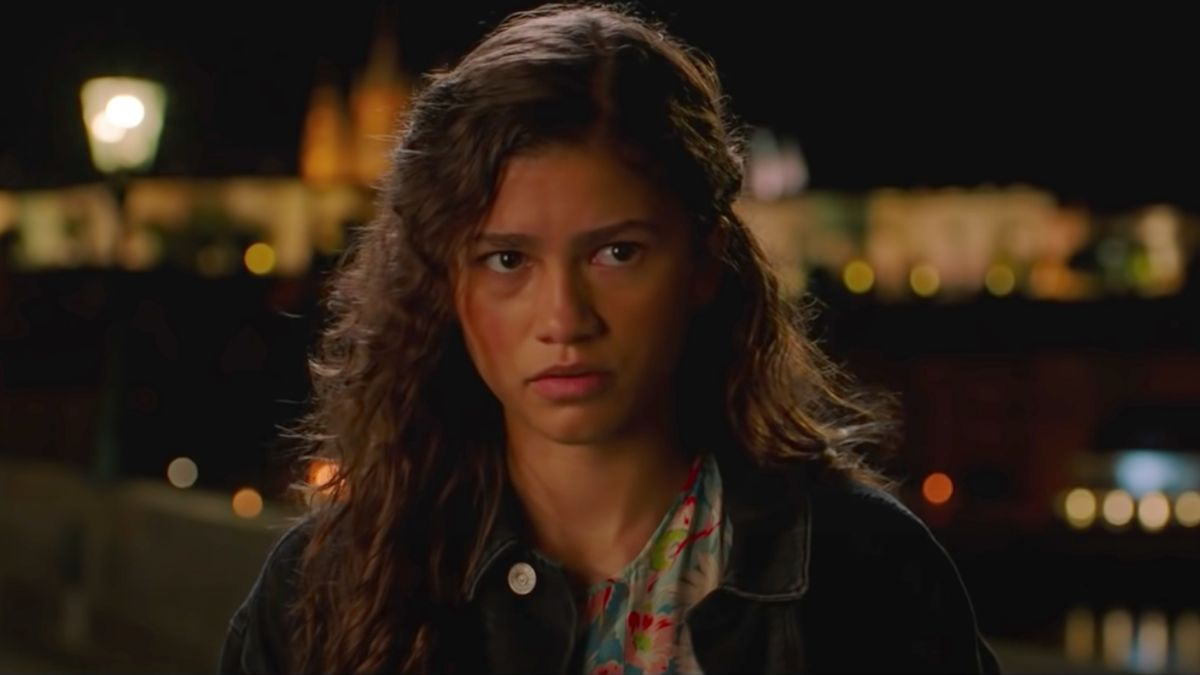
When the Marvel-era films introduced Zendaya as Michelle Jones—later shortened to M.J.—it was immediately clear this wasn’t a traditional copy of Mary Jane Watson. The creators reimagined the character with a different background, a different sense of humor, and a different way of carrying herself. Some fans were surprised; others welcomed the refresh. Zendaya quickly proved that M.J. doesn’t have to look like the past to matter just as much.
Her M.J. is sarcastic, intelligent, observant, and emotionally guarded. She isn’t framed as a classic damsel in distress, but as someone who notices details—and senses that Peter is hiding more than he admits. The chemistry between Zendaya and Tom Holland is built on a more contemporary dynamic: less melodrama, more natural awkwardness, nervousness, and authentic coming-of-age moments.
Zendaya as MJ / Photo: Sony Pictures
This M.J. helped Spider-Man step into a new era. She isn’t just the romantic destination; she becomes an active part of the story. She has her own perspective, her own rhythm, and she isn’t defined solely by standing next to the hero. Zendaya also adds a quiet expressive power—able to communicate doubt, affection, and unspoken questions even in the smallest, stillest scenes.
How her role beside Peter Parker changed
While older films often positioned M.J. as “the dream love,” the newer interpretation presents her as a partner in searching for truth. That shift matters. Peter isn’t only fighting to protect someone—he’s also forced to face the fact that the person beside him can see him more clearly than he’d like. Zendaya gives the character depth that turns the relationship into more than romantic pull; it becomes part of Peter’s moral growth.
Actresses as a mirror of their time—and the genre’s evolution
Comparing Kirsten Dunst and Zendaya isn’t really about deciding who was “better.” Each was exactly the M.J. her era needed. Dunst embodied sweeping romance, emotional drama, and the classic idea of a fated love story. Zendaya represents a modern heroine—independent, sharp, and uninterested in fitting old templates.
What unites them is crucial: neither feels like decoration beside Spider-Man. In both cases, M.J. strongly shapes how audiences perceive Peter Parker. When Peter fails, it hurts more because of what it means for his bond with M.J.. When he wins, the joy feels more believable because he has someone to share it with.
Without M.J., Spider-Man would lose his heart
Spider-Man has always stood out because under the mask he isn’t an untouchable god or a flawless warrior. He’s a kid who’s scared, uncertain, and often loses what he loves most. That’s why M.J. matters. She reminds him why the fight is worth it—and also how much his choices cost. The actresses who have played her gave these films something no digital effect can replace.
Whether viewers remember the gentle, era-defining Kirsten Dunst or the modern, self-possessed Zendaya, one thing remains true: without a compelling M.J., Spider-Man wouldn’t be as powerful, moving, or unforgettable. These actresses didn’t just elevate a supporting role—they helped create the soul of the story.
Source: Sony Pictures, Marvel Studios, IMDb, Filmozrout.cz






Comments 0
No comments yet. Be the first to share your thoughts!
Leave a Comment