
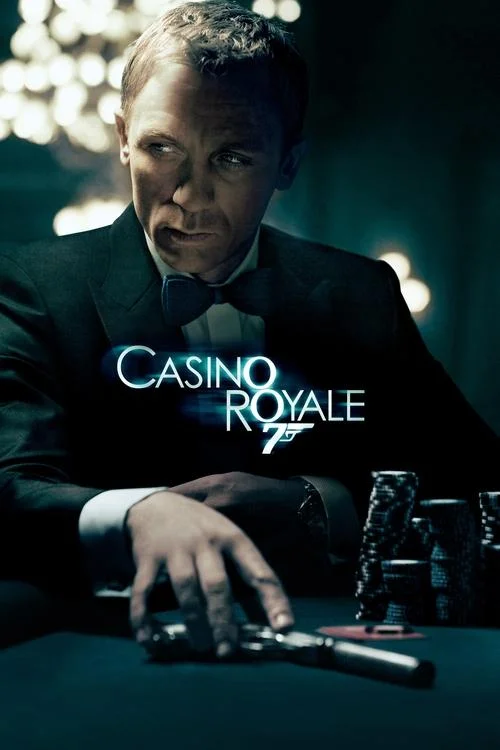
Casino Royale arrived in theaters in 2006 as the 21st official James Bond film produced by Eon Productions—and it wasn’t just another installment. It functioned as a true reset, taking audiences back to the beginning and presenting 007 before he became the polished, unshakable professional seen in earlier entries. Director Martin Campbell, who had already helped revive the series with GoldenEye, returned to steer the franchise through another pivotal reinvention.
It’s striking that Ian Fleming’s very first Bond novel waited more than fifty years for a full-scale Eon adaptation. Published in 1953, Casino Royale drew on Fleming's wartime intelligence experience and on the atmosphere of the Estoril Casino in Lisbon, Portugal, a real-world crossroads where agents and informants from multiple powers mingled during World War II. Before Eon could bring the story to the big screen, the material had already inspired a CBS television adaptation in the U.S. and, later, the famous 1967 parody film.
The modern film only became possible after complicated rights issues were untangled—at one point, industry talk even involved a rights swap that included Spider-Man. Once the legal knots were finally loosened, producers Barbara Broccoli and Michael G. Wilson could move forward with a proper adaptation. Several filmmakers were considered before Campbell, including Andrew Niccol and Matthew Vaughn, but the producers ultimately chose the safest pair of hands for a high-stakes restart.
A bold course correction—and the search for a new Bond
After Die Another Day proved financially successful but critically divisive, the initial plan was to bring Pierce Brosnan back. However, rising costs and contract realities pushed the producers toward a new actor and a new tone—setting off one of the most closely watched casting processes of its era. Reports at the time suggested a huge pool of possibilities, with names such as Dominic West, Gerard Butler, Jude Law, Orlando Bloom, Karl Urban, and even a young Henry Cavill appearing in the conversation.
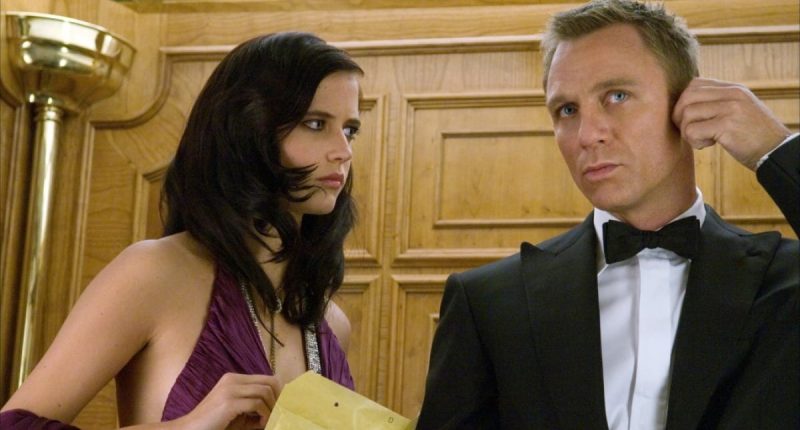
Daniel Craig reportedly hesitated at first. He felt the series had become trapped in formula and had lost urgency. But after reading the script, he changed his mind—recognizing an opportunity for something harsher, more psychological, and far less showy than what audiences had come to expect. When his casting was officially announced, backlash hit immediately. Some fans and outlets complained he was “too blond,” “too ordinary,” or simply didn’t match the traditional image of Bond.
The finished film flipped that narrative. Craig committed intensely: he trained relentlessly, added muscle, quit smoking, and worked through Fleming’s novels to find the character’s core. He also consulted people with real intelligence-service experience. Production was punishing—he suffered multiple injuries, and after damaging his front teeth, even required emergency dental work. The payoff was a Bond who felt dangerous, raw, and physically real—less a fantasy icon and more a man who bleeds.
Casino Royale / Photo: Columbia Pictures
Vesper Lynd—and a villain you don’t forget
Another major key to the film’s impact was casting Eva Green as Vesper Lynd. Many well-known actresses were considered, but Green reportedly stood out immediately. Her Vesper isn’t merely a “Bond girl”—she’s a fully realized dramatic force who fundamentally changes Bond’s life. That choice gave the story a stronger emotional spine than most earlier entries in the franchise.
Bond’s opponent, Le Chiffre, became equally memorable in the hands of Mads Mikkelsen. While Fleming’s original character looked different on the page, the film version leaned into restraint: cool intelligence, quiet menace, and the unsettling detail of an eye that appears to weep blood—a trait inspired by a real medical condition. Mikkelsen’s Le Chiffre doesn’t play like a cartoon villain; he feels like a man under immense pressure, whose vulnerability is inseparable from his threat.
The screenplay also evolved significantly. Neal Purvis and Robert Wade handled early drafts, with Paul Haggis later strengthening the emotional weight—especially toward the end—so Bond’s transformation wouldn’t be only physical, but internal. Still, the film preserved two crucial elements from the novel: the brutal torture sequence and the final line that seals Bond’s relationship with Vesper in a single, devastating stroke.
Action that pushed the series into a new era
Casino Royale also became famous for action that felt more physical and plausible than the franchise’s recent past. The opening chase through a construction site in an African setting is often ranked among the series’ best. It was shaped by the rise of freerunning, and the role of Mollaka was played by Sébastien Foucan—one of the movement style’s pioneers. The scene was actually filmed in the Bahamas at an unfinished hotel complex, modified to resemble an active work site.
The airport sequence was another standout, filmed across multiple countries and built from practical effects, careful choreography, and classic stunt work. One memorable moment—a police vehicle flipping through the air—was achieved with minimal CGI, using a specialized rig and later removing only the visible technical elements digitally.
Casino Royale / Photo: Columbia Pictures
The film’s most famous car stunt arrived later: Bond’s Aston Martin DBS, swerving to avoid Vesper, barrels into a record-setting chain of flips—earning a world record for the most rolls in a single on-screen car crash at the time. A standard rollover method wasn’t enough because the car’s design resisted flipping, so the team used an air-powered mechanism mounted beneath the vehicle. The shot has since become a defining moment of modern Bond history.
Details that turned the film into a modern classic
Even years later, fans continue to spot the small choices that helped Casino Royale feel fresh. The opening titles, for example, avoid the traditional silhouette imagery and instead lean into card and suit symbolism inspired by the first edition’s cover design. The theme song, You Know My Name, performed by Chris Cornell, doesn’t need to say the film’s title to announce a new identity—driven, aggressive, and newly alive.
There’s also the now-iconic moment of Bond emerging from the sea in blue swim trunks. According to production anecdotes, it wasn’t originally conceived as a major homage; it came from an improvised beat after an unexpected stumble on a sand ridge. Still, it became one of the film’s most recognizable marketing images. Another scene gained power through Craig’s input: the shower sequence with Vesper works precisely because she remains fully clothed, making the moment feel less staged and more intimate, protective, and human.
The film also includes a direct lift of Bond’s martini order from Fleming’s text. And while the novel’s high-stakes game is baccarat, the movie switches to Texas Hold’em—far more accessible to contemporary audiences—without losing the literary spirit that anchors the story.
A success that silenced the doubts
With an estimated budget of around $150 million, Casino Royale went on to earn more than $600 million worldwide. At the time, it became the highest-grossing Bond film and proved the gamble—new actor, new tone, new foundation—was the right one. Critics praised its return to a more grounded spy style, stronger character work, and a balance of emotion and action that felt newly mature.
Casino Royale wasn’t only a new beginning for Daniel Craig—it was a fundamental renewal of the Bond brand itself.
The film also laid the groundwork for the arc that would define Craig’s era, demonstrating that even a decades-old franchise can feel sharp again when it returns to what makes its central character compelling. That’s why Casino Royale remains widely regarded as one of the finest James Bond films ever made.
Sources: All the Right Movies, IMDb, Rotten Tomatoes, Deadline, Wikipedia



Comments 0
No comments yet. Be the first to share your thoughts!
Leave a Comment